
Why Local Flowers Are Better (And Why It Matters More Than Ever)
Every year on Earth Day, I find myself reflecting on the same thing:
How deeply connected we are to the natural world… and how easy it is to forget.
Before I became a flower farmer, I was a wildlife biologist. I studied wildlife conservation and ecology in California, Germany, Cameroon, South Africa, and Tanzania, where I spent years learning about ecosystems, biodiversity, and the quiet ways our choices shape the world around us.
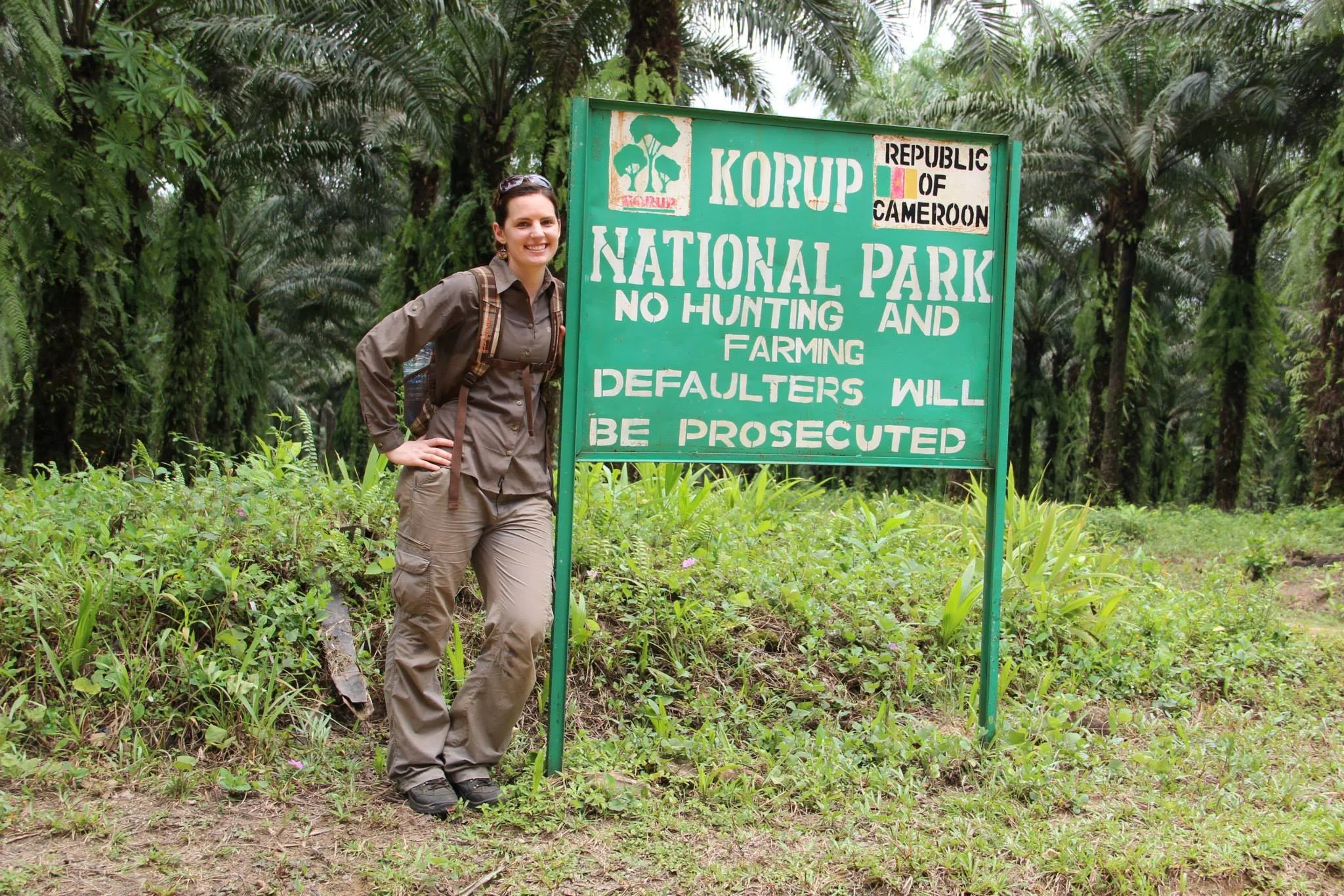
The natural world was my playground long before I ever grew a flower.
It’s what made my shift into farming such a natural transition for me:
I love the ecological side of farming. I love creating habitat for pollinators — I don’t spray anything on my flowers and my cutting garden is home to an abundance of pollinators (as well as frogs and even a snake or two, eek!).
I love the artistry of floral design — I’m a Waldorf graduate, so I was raised singing in choirs, playing the cello, knitting, crocheting, sewing, and painting.
I love the vibrant colors of the specialty varieties I grow.
I love that I can offer sustainable flowers as a way to bring beauty, joy and connection to my community.
I love the joy my flowers bring to others.
But there’s something else that came with becoming a flower farmer:
I became more aware of the seasonality of flowers.
I learned that most flowers in grocery stores travel thousands of miles (and have a huge carbon footprint) before coming into our homes.
I learned the difference in, not just in how local flowers look, but what they represent.
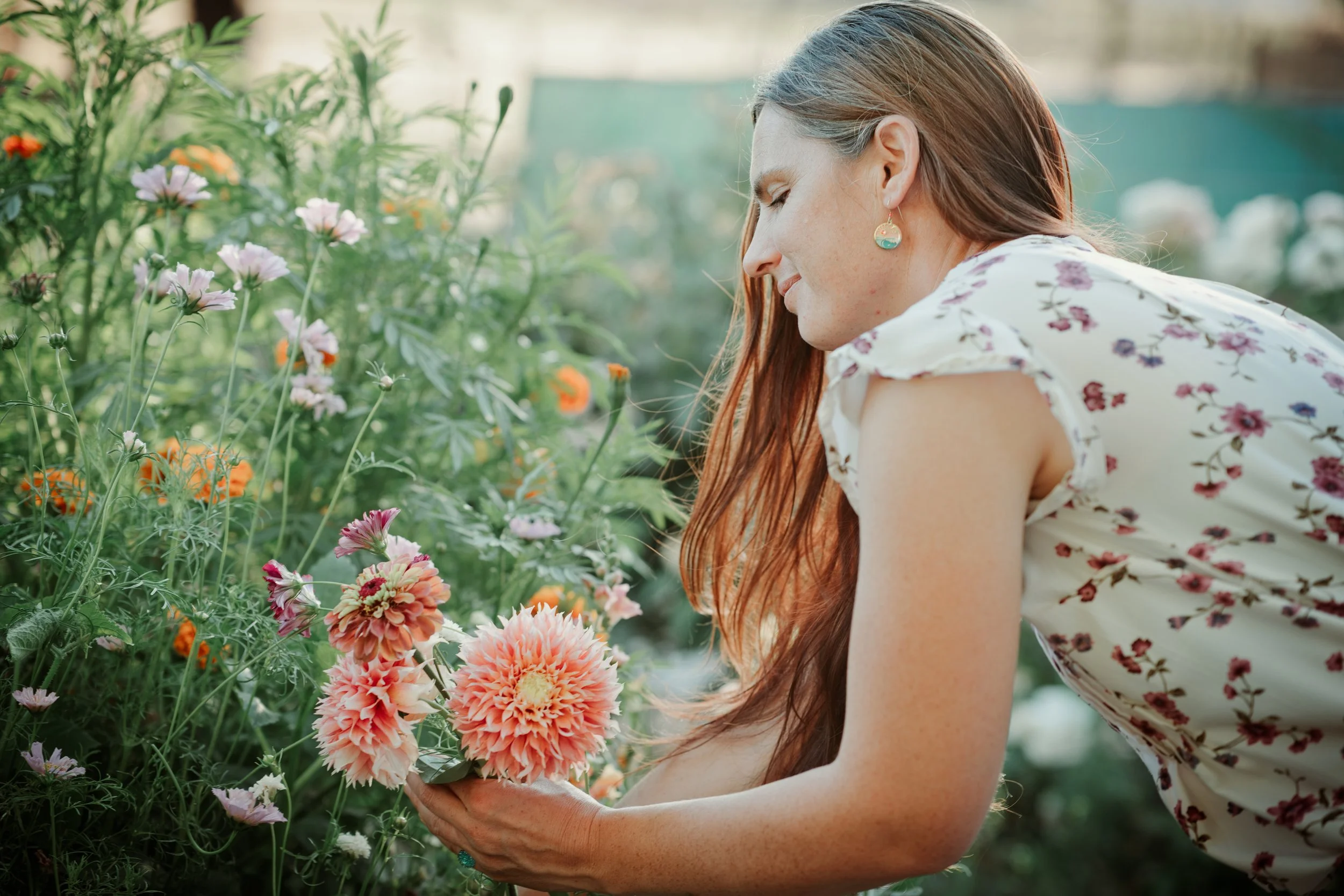
Becoming a farmer taught me to love gardening, too.
The Hidden Story Behind Most Flowers
Most flowers sold in grocery stores, and even those used by many florists, are not grown locally.
In fact, nearly 80% of cut flowers sold in the United States and Canada are not actually grown in North America. Most imported flowers are grown in South America, Asia, and even Kenya and then flown in to be sold at wholesale houses around the country. This means that the commercial cut flower industry has an enormous carbon footprint, with flowers being flown literally around the world every day!
They travel thousands of miles and are sprayed with chemicals to keep them fresh, before they ever reach your hand.
These flowers are:
Harvested early to survive shipping
Shipped dry to save on cost
Stored in refrigeration for days or weeks
Transported across continents
Often grown using intensive methods and chemicals
By the time they arrive, they’ve been handled, shipped, and stored in easy that prioritize durability over beauty, fragrance, and connection.
And while they may still be pretty, they’ve lost something along the way.
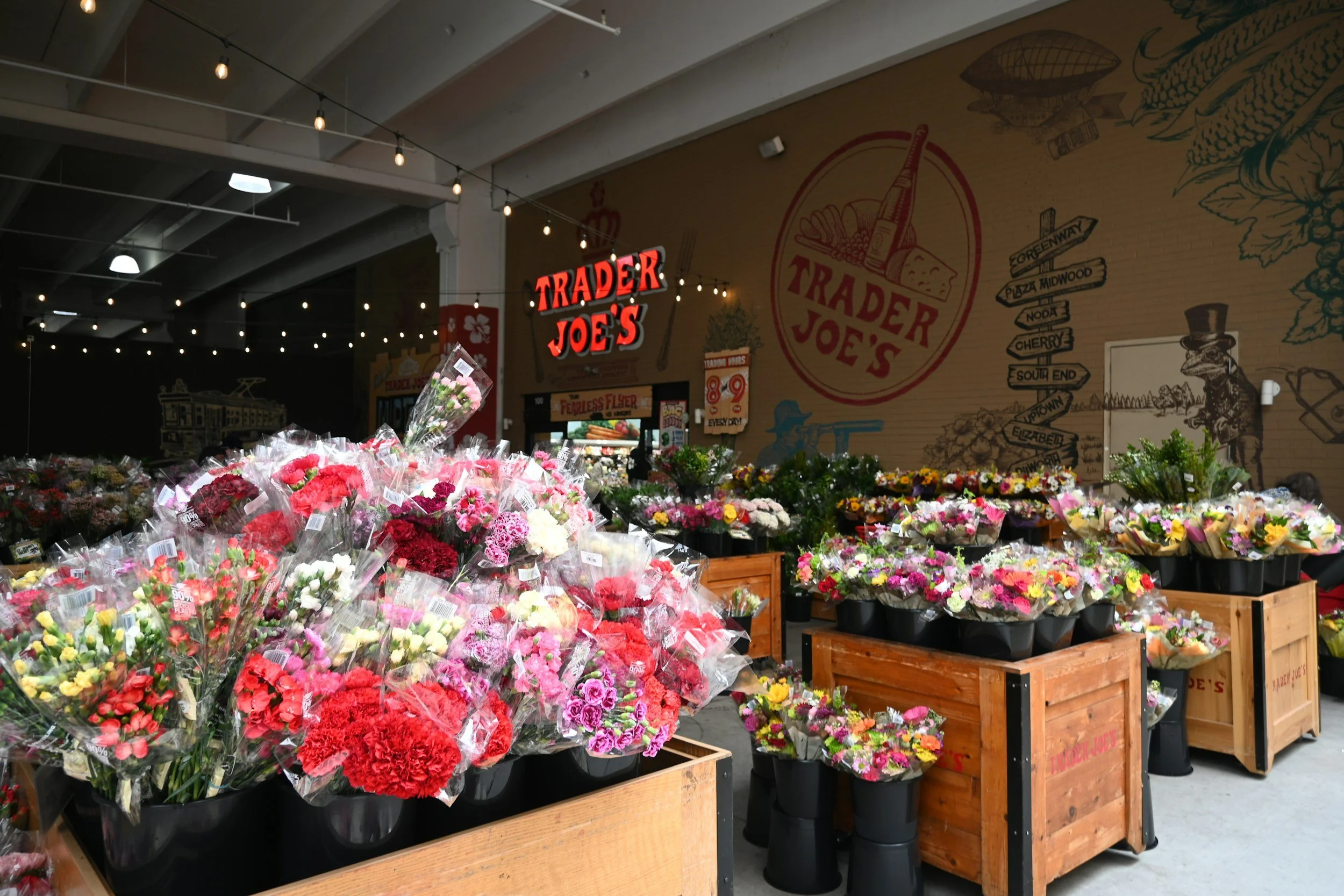
While places like Trader Joe’s do carry some local flowers, most grocery store flowers are imported, wrapped in plastic.
What “Local Flowers” Really Means
Local flowers are, quite simply, flowers grown near where you live.
But they are also so much more than that.
They are:
Seasonal
Fresh
Often grown on small farms
Connected to a place, a climate, and a moment in time.
They haven’t travelled across the world.
They’ve been grown, harvested, and arranged with intention — often by the same hands.
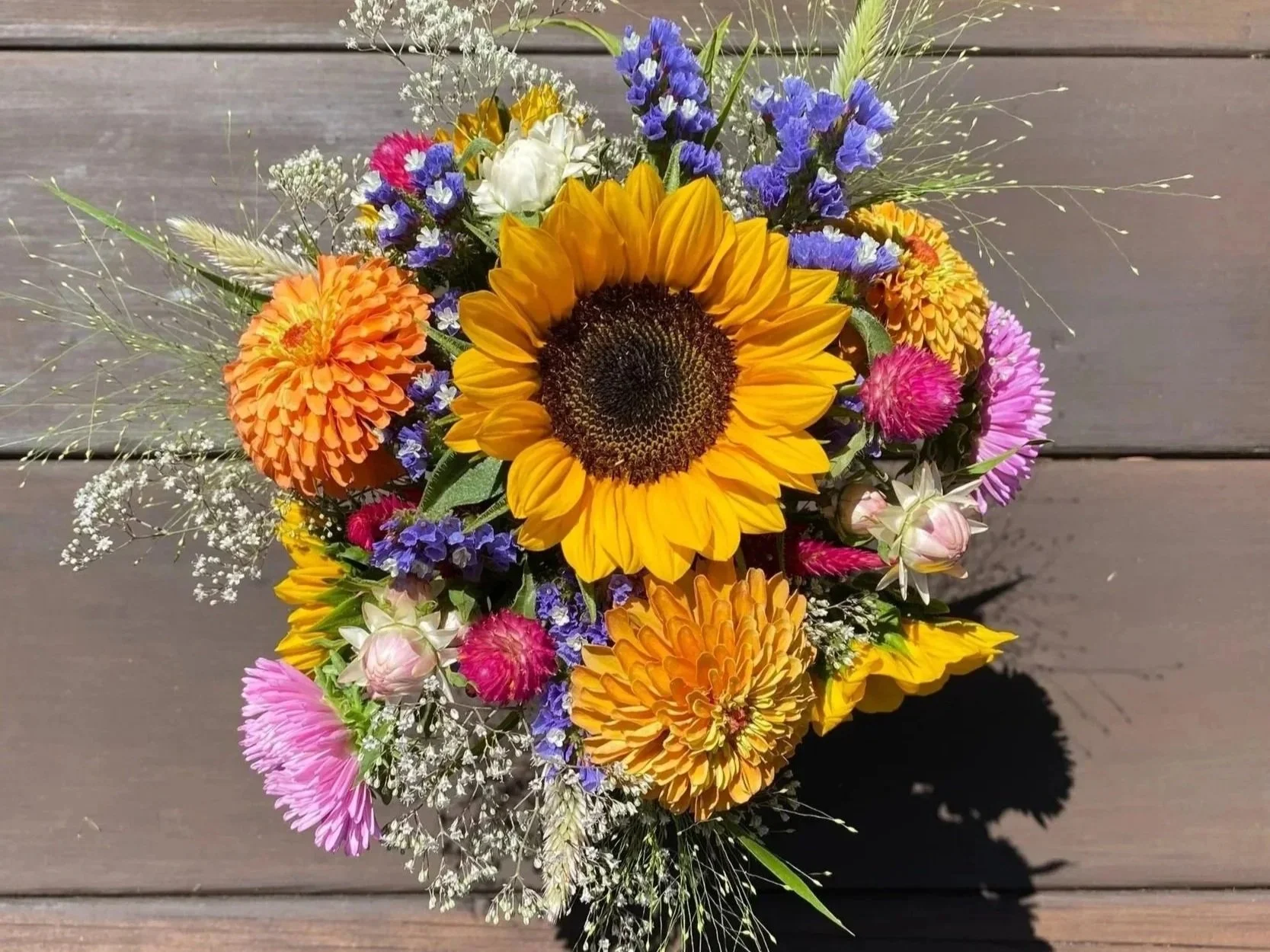
Flower farmers grow much more vibrant and unique varieties than grocery stores carry.
5 Reasons Local Flowers Are Better
1. They’re better for the environment.
Local flowers don’t require long-distance shipping, refrigeration, or excessive packaging.
That means:
Lower carbon emissions
Less energy use
Less waste
Choosing local flowers helps reduce the environmental footprint of the floral industry.
2. They’re fresher and last longer.
When flowers are grown locally, they can be harvested closer to their natural bloom stage.
That means:
Stronger stems
Better vase life
More vibrant blooms
They haven’t spent days in transit. They go from field to vase much more quickly, and often, from field to a farmer’s hands and directly into yours.
3. They support pollinators and biodiversity.
Local flower farms often grow a wide diversity of plants, not just a few standardized varieties.
This creates habitat for:
Bees
Butterflies
Beneficial insects, like lady bugs
Amphibians
Reptiles
Songbirds
And supports healthier ecosystems overall.
4. They’re more unique and seasonal.
Local flowers follow the rhythm of the seasons.
→ Spring flowers look different than summer flowers.
→ Summer looks different than fall.
Instead of the same blooms year-round, you get:
Unique varieties
Unexpected textures (hello celosia!)
Flowers that feel alive and in-season
There’s something so special about experiencing flowers as they naturally bloom.
5. They support real people and small farms.
When you buy local flowers, you’re supporting:
Small farms
Local families
Your own community
You’re choosing connection over convenience. And that matters.
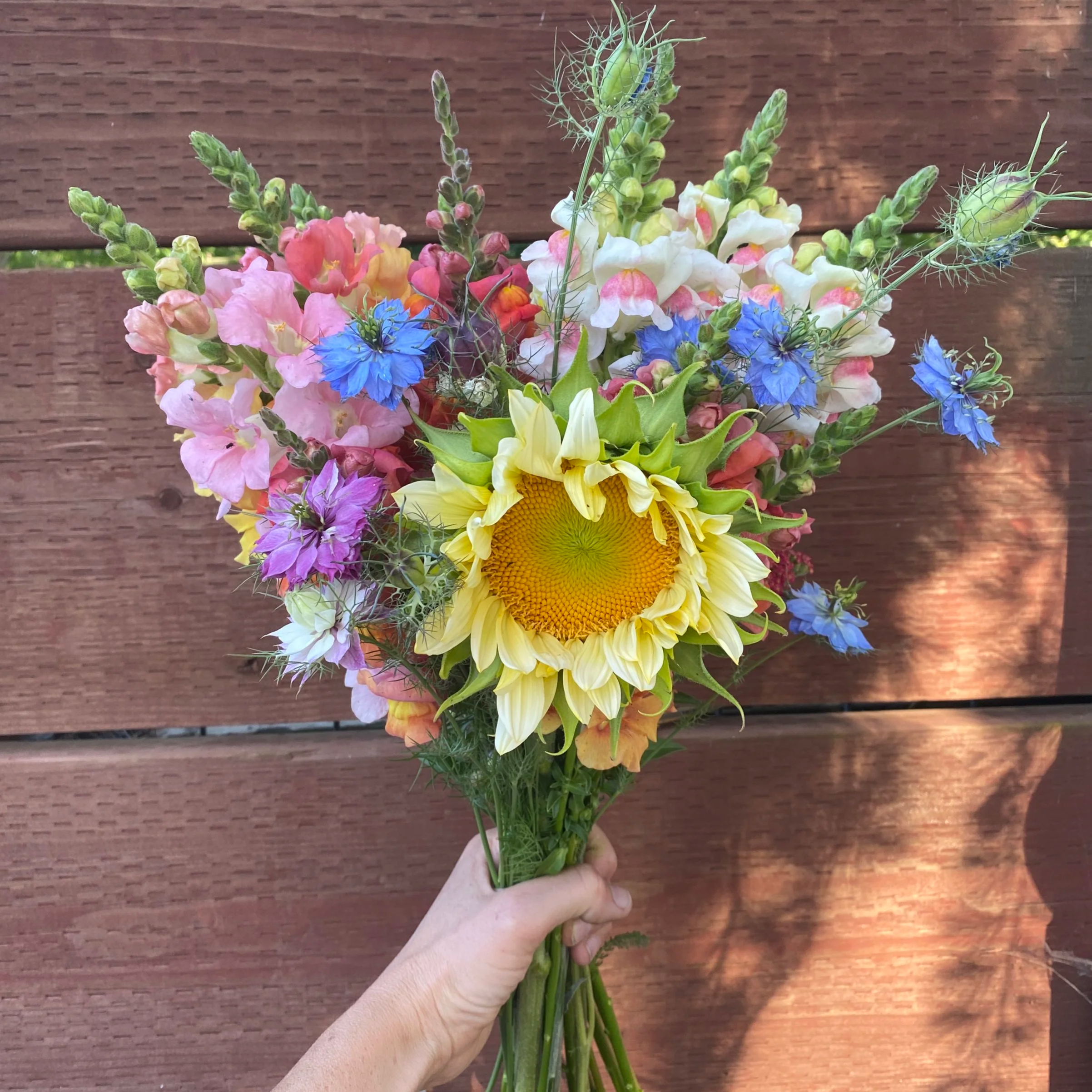
Farm-grown flowers come in unique colors, shapes, sizes and textures.
Why This Matters to Me
As a farmer-florist, everything I’ve talked about is something I think about every single day.
I grow as many of my own flowers as I can, and when I need to supplement, I prioritize sourcing flowers from other local growers, whenever possible.
Because to me, the flowers that I grow are not just decoration.
They are a way to:
Bring beauty into everyday life
Mark meaningful moments
Connect with the seasons
Create something real and intentional
What This Means for You
Choosing local flowers doesn’t have to be complicated.
It can be as simple as:
Buying from a local flower farm
Choosing seasonal blooms
Asking where your flowers came from (and choosing flowers grown in your state over those from out of state or out of the country)
Supporting small growers when you can
Every small choice adds up. And over time, those choices shape communities and the kind of world we live in.
From My Garden to Your Home
At Blooming Joy Gardens, I create seasonal, garden-inspired florals using locally grown flowers whenever possible — many of them grown locally, right here on my farm.
Whether it’s a simple bouquet of farm-grown flowers or florals for a meaningful gathering or event, my goal is always the same:
To bring a little more beauty, connection, and joy into your life.
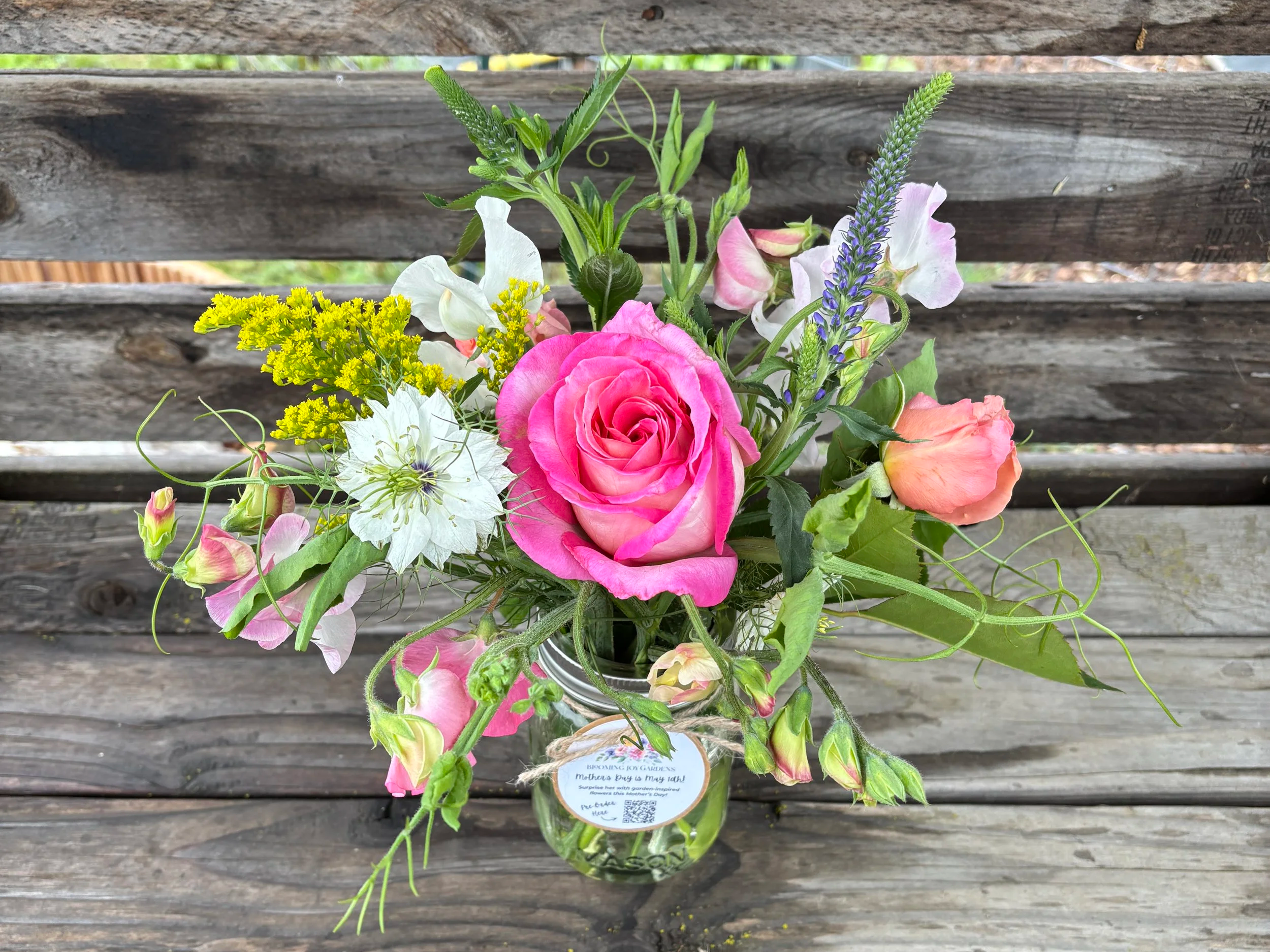
Every bouquet I make is unique and feels like it came straight out of the garden — because it did.
A Simple Way to Celebrate Earth Day
If you’re looking for a simple way to celebrate Earth Day this year, here are a few ideas:
Buy flowers from a local grower
Plant something in your garden
Notice what’s blooming around you
Let it be less about doing everything perfectly and more about reconnecting to what matters.
Mother’s Day Flowers
With Mother’s Day coming up, sustainability is also something I think about deeply when creating arrangements.
Mother’s Day is the Super Bowl of floral holidays, as well as one of the most wasteful days of the year. Flowers are shipped in by the thousands to meet demand, most of which is flown around the world, wrapped in plastic.
Whenever possible, I design with locally grown flowers, growing as many as I can myself using sustainable practices, and sourcing the rest from other local farms who share the same values I do, whenever possible.
If you’re local and looking for something special this Mother’s Day, I’m offering a limited number of garden-inspired, seasonal bouquets and arrangements this year.
Pre-orders are open now through May 6th. You can view and pre-order yours below.
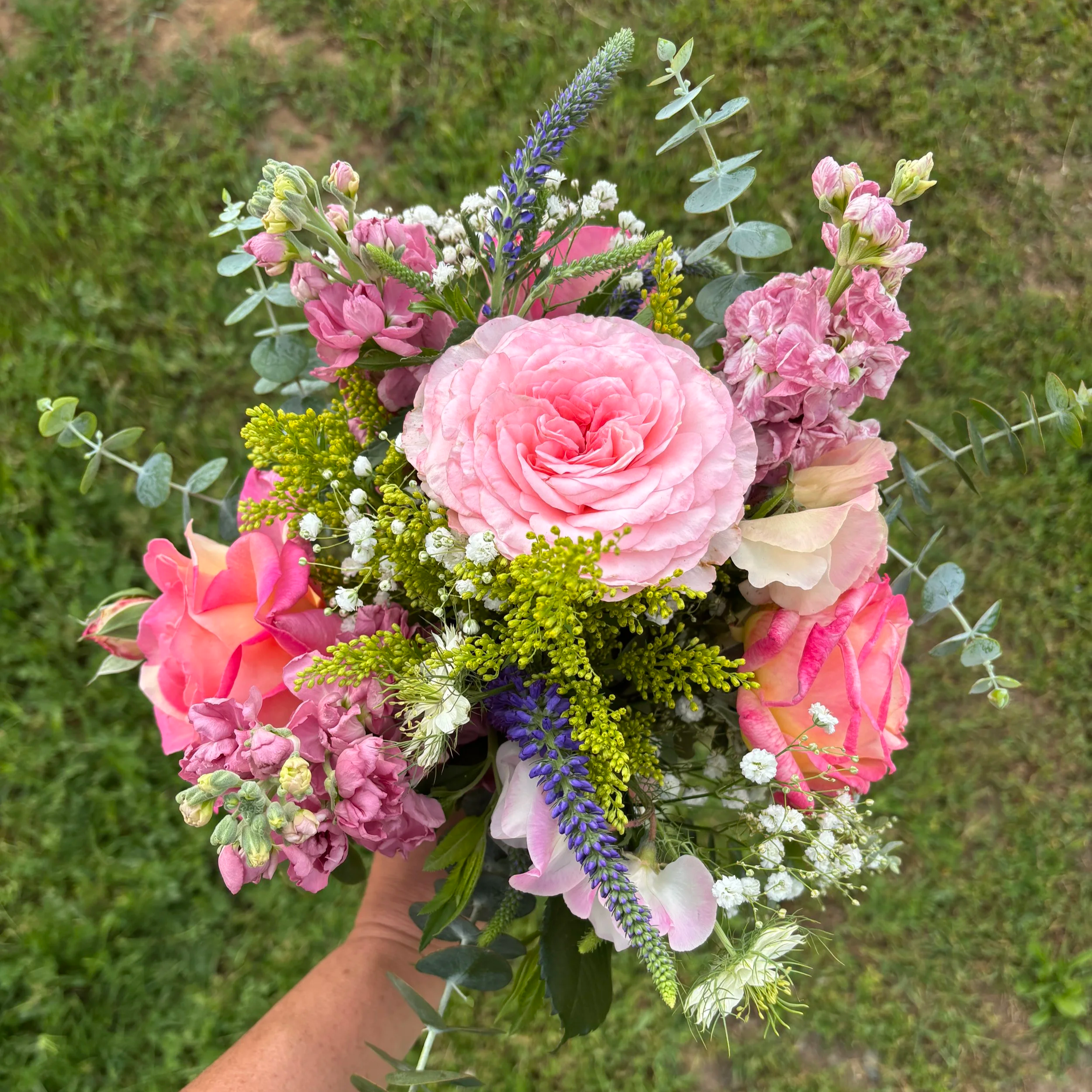
I’d love to create a Mother’s Day Arrangement for you this year.
